Application noteUsing coloured light to hide or highlight print
The short answer
Light the part in the same colour as the print you want to hide, or in the opposite colour to make it stand out. A monochrome camera then sees only the contrast you chose.
- Technique
- Bright field, red
- Industries
- Packaging and labels, Electronics
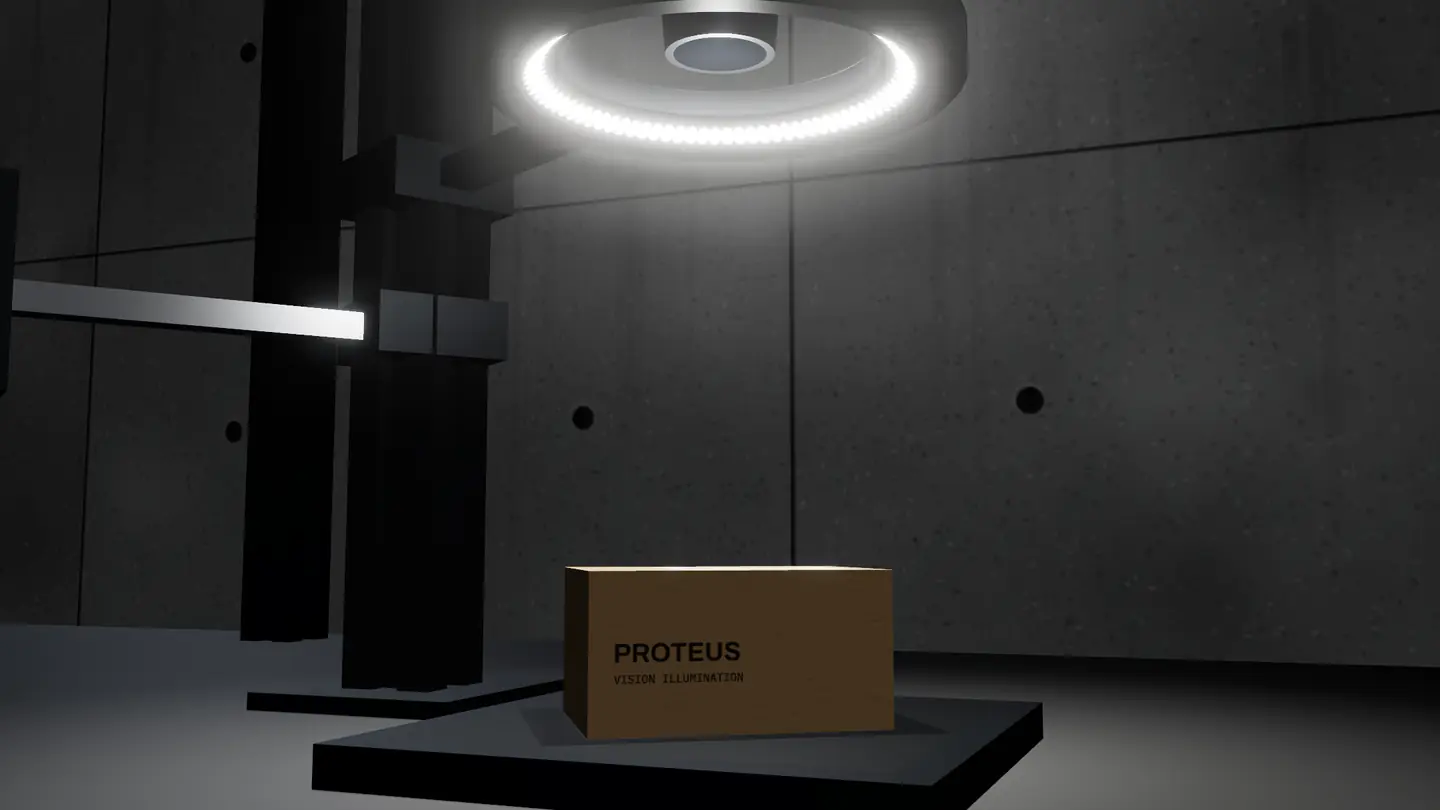
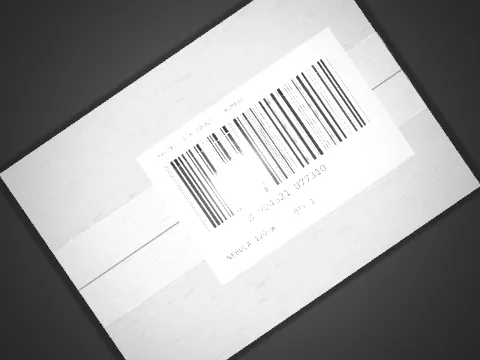
What the camera sees
Camera views come from the lighting bench, which simulates each light on the same part.
The problem
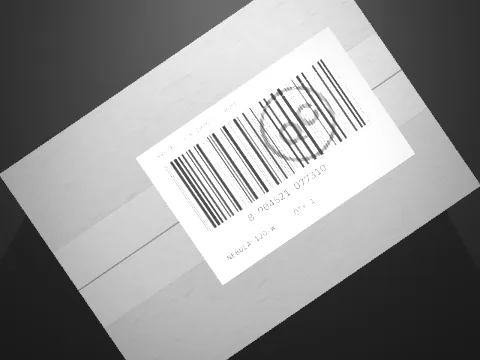
A red QC stamp or a coloured logo overlaps the black barcode or text you need to read. Or a coloured feature, such as a blue cable or an orange seal, has to stand out from a background of similar brightness. Under white light a monochrome camera turns every colour into a similar grey.
Why it works
Coloured inks and materials reflect their own colour and absorb the others. Under red light, red ink reflects about as much as white paper, so to a monochrome camera the stamp disappears while black bars, which absorb every colour, stay dark. Under green or blue light the same red ink absorbs the light and shows dark. The colour of the light sets which features are bright and which are dark, before any image processing.
How to set it up
- Use a monochrome camera and a single-colour light: red, green or blue.
- To hide a colour, light in that colour. To make it dark, light in a colour from the opposite side of the colour wheel: green or blue for red ink, red for blue ink.
- Fit a band-pass filter on the lens matched to the light's colour, so room light does not wash out the effect.
- Infrared: many printed colours and dyes become nearly invisible in infrared, while carbon-based black print stays dark. It is a way to read black codes through coloured overprint.
- Ultraviolet makes fluorescent materials glow: adhesives, coatings and inks with a fluorescent tracer show up against a dark part.
What usually goes wrong
- A colour camera with white light, converted to grey afterwards: most of the contrast available optically is lost.
- Daylight or room light in the cell, which adds every colour back.
Lights for this job
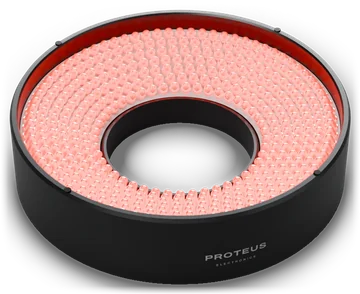
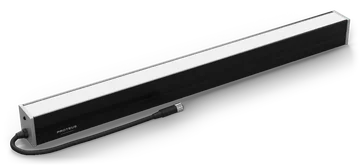
Tell us what you need to see.
Describe the part, the defect and the working distance. An engineer replies with the light, or designs one.