Machine vision ring lightsSaturn
Direct and low-angle light around the lens.
Compact ring lights provide direct lighting to the centre of the inspection piece to emphasise the characteristics of the workpiece. Supported with diffusers and polarisers to inspect metal parts, glass, electronics and glossy paper.
Available in white, red, green, blue, infrared and ultraviolet.
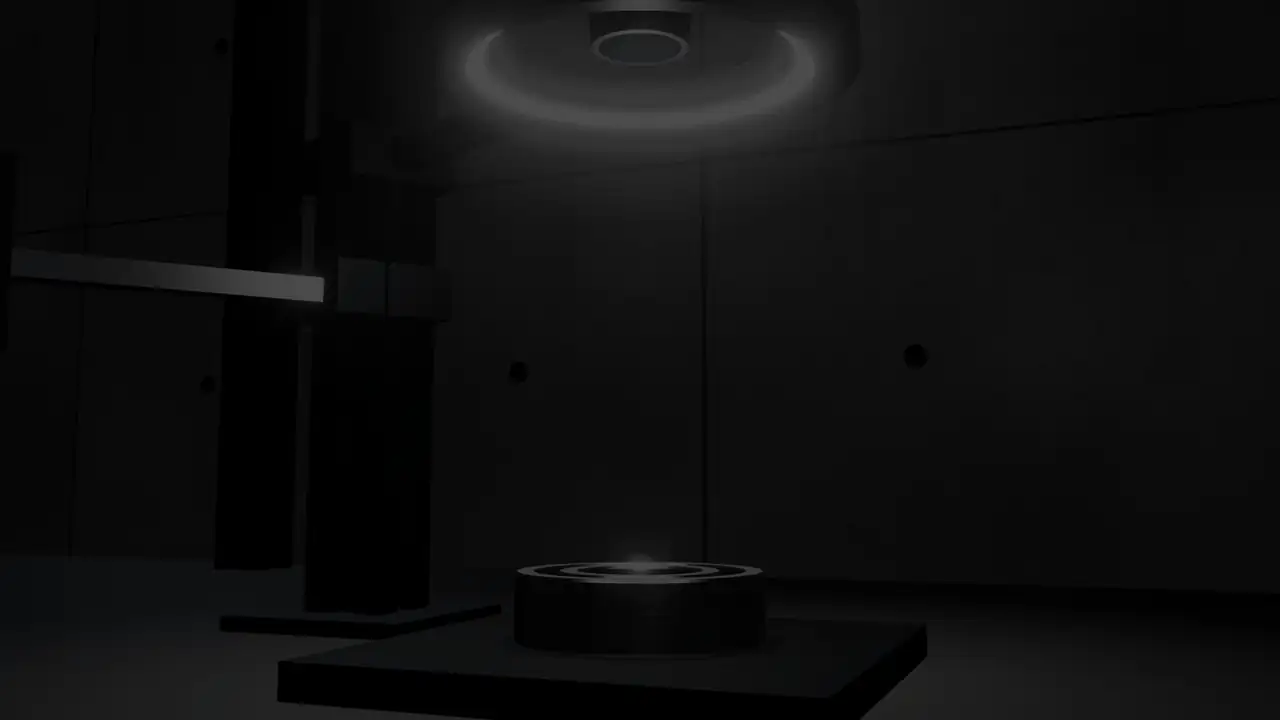
What a ring light does to a part.
A ring of LEDs around the lens lights the part from above: flat faces turn bright, engraving and stains turn dark. Lower the ring until its light skims the surface and the picture inverts.
The bench below is a simulation. Change the part or the wavelength, and drag to look around.
Where Saturn ring lights work
- Reading 2D codes, OCR and print on labels, cartons and flat parts.
- Presence, position and damage checks on matte parts and assemblies.
- Stains, smears and print defects that show as a change in brightness.
- With a low-angle ring (dark field): dot-peened and engraved marks, edges, scratches and burrs on flat metal.
Models and wavelengths
- Saturn-MicroW
- Saturn-9530-WWRB
- Saturn-10050 HPWRGBIRUV
- Saturn-14080-WWRB
- Saturn-150110-LA30WRGBIRUV
- Saturn-HA60/7240-RR
- Saturn-LA30/9530-RRW
- HeliosWRB
Also in the family
| Saturn-HP-W | W |
|---|
Electrical and optics
| Supply | +24 V DC |
|---|---|
| Strobe input | 5 to 24 V, 1 to 5 V optional |
| Optics | Diffuser low, medium or high; polariser |
Dimensions, drawings and STEP models are sent with the datasheet.
Choosing a ring light
Working distance and field of view
Ring diameter, LED angle and working distance decide where the light lands. Give us the distance from the light to the part and the field of view, and we match the ring to them.
Bright field or dark field
A ring close to the lens lights flat faces evenly (bright field). A low-angle ring placed near the part lights only what sticks up or dips down (dark field).
Diffuser
Low, medium or high diffusion. More diffusion softens hot spots on glossy parts, at the cost of some intensity.
Polariser
A polariser on the ring and another on the lens, crossed, remove most of the glare from shiny surfaces.
Wavelength
White, red, green, blue, infrared and ultraviolet. Pick the colour that makes your feature contrast with its background.
Application notes
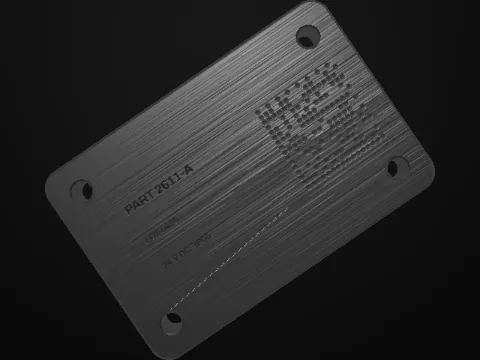
Dark field
Reading dot-peened 2D codes on metalUse dark-field lighting: a low-angle ring light placed close to the part.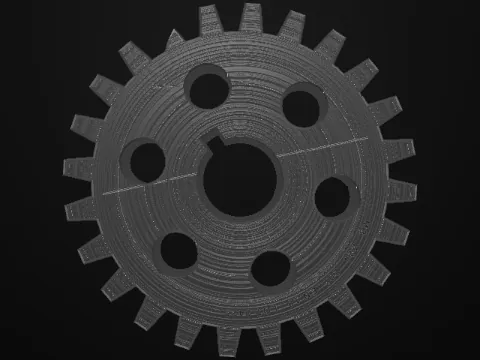
Dark field
Finding burrs and chipped edges on machined partsUse dark-field lighting: a low-angle ring light close to the part, or bar lights from the sides.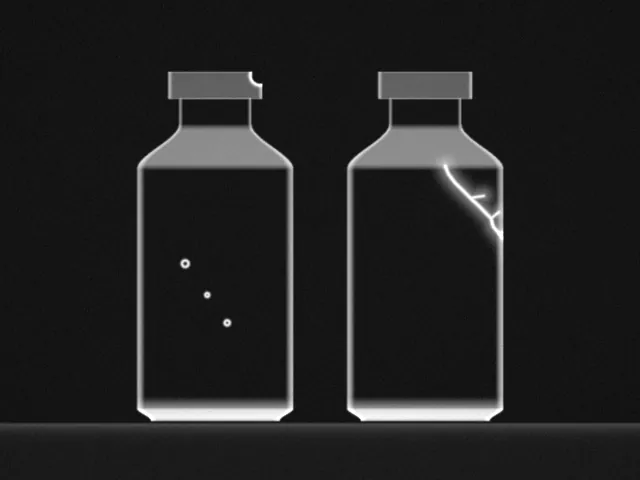
Dark field
Finding cracks and chips in glass vialsUse dark-field lighting: light the glass from a low angle against a black background.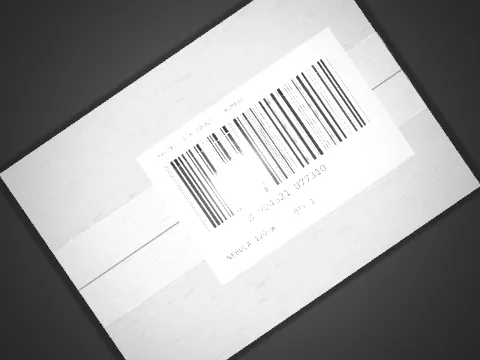
Bright field, red
Using coloured light to hide or highlight printLight the part in the same colour as the print you want to hide, or in the opposite colour to make it stand out.
Tell us what you need to see.
Describe the part, the defect and the working distance. An engineer replies with the light, or designs one.