Application noteFinding cracks and chips in glass vials
The short answer
Use dark-field lighting: light the glass from a low angle against a black background. Sound glass stays dark, and every crack, chip and bubble scatters the light and glows.
- Technique
- Dark field
- Industry
- Pharma and food
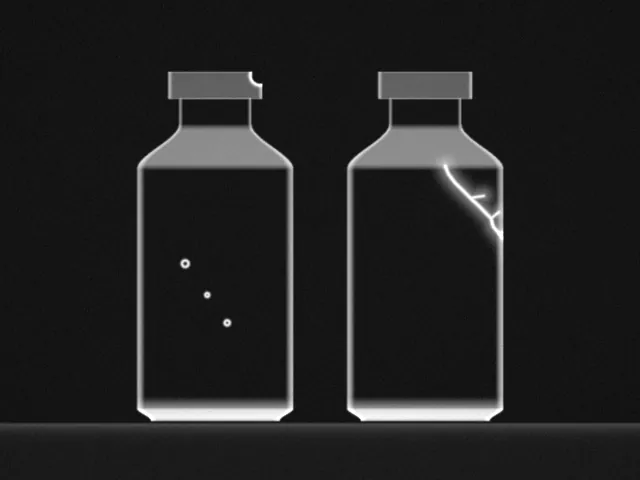
What the camera sees
Camera views are simulated: the part and the lights are modelled, then rendered as a monochrome camera would see them.
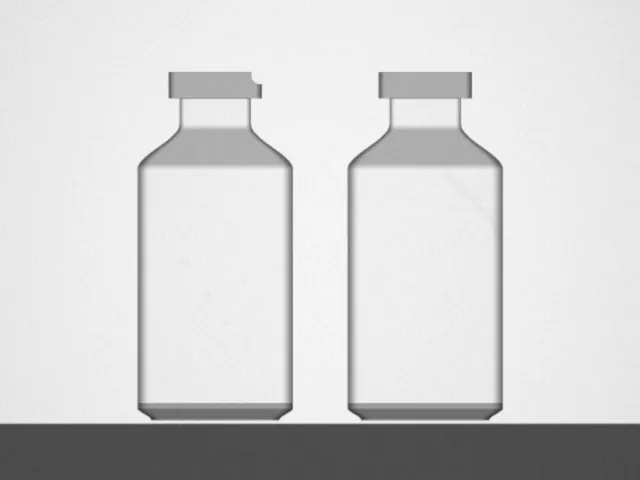 BacklightDark field
The problem
Vials, ampoules and cartridges must be free of cracks, chipped crowns and bubbles in the glass before they are filled. A hairline crack is a thin plane inside clear glass. Over a backlight the light passes through it almost unchanged: the vial looks clean, the crack is a faint line at best, and bubbles disappear.
Why it works
In dark field the light enters the glass from a low angle and the background behind the vial is black, so sound glass sends little light into the lens and stays dark. A crack, a chip or a bubble breaks the glass into new surfaces at new angles, and those surfaces scatter part of the light towards the camera. The defect glows against a dark vial. The walls, the base and the crown glow faintly too, which gives the outline to locate the defect against.
How to set it up
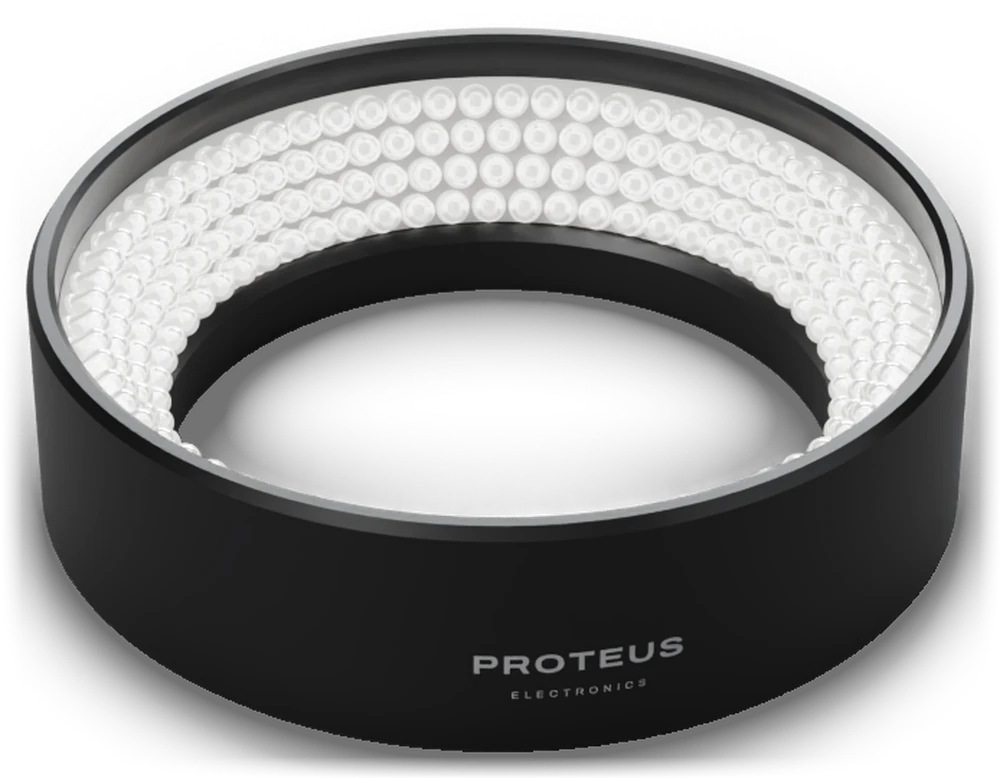
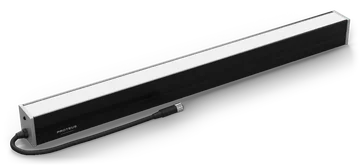
- Light the vial from below or from the side, at a low angle: a low-angle ring around the base, or bar lights at the sides.
- Keep everything behind the vial black and matte, so only light scattered by the glass reaches the camera.
- Rotate the vial in front of the camera and capture several images, so a crack facing any direction turns towards the light.
- Give the crown and the shoulder their own views; that is where chips and cracks usually start.
- For particles in a filled, clear liquid, a backlight is the standard: particles show as dark specks, best seen just after the vial is spun and stopped.
What usually goes wrong
- A backlight alone on empty vials, where hairline cracks barely show.
- A light or shiny background behind the vial, which lights the clear glass and drowns the defects.
- Scratches and dirt on the outside of the glass, which glow as well. Clean the vials, or tell the defects apart by shape.
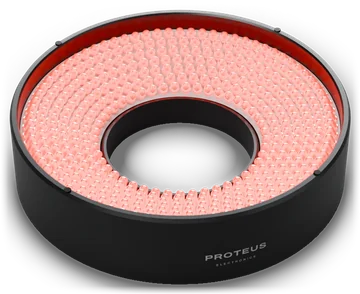
Lights for this job
Tell us what you need to see.
Describe the part, the defect and the working distance. An engineer replies with the light, or designs one.