Application noteReading date and lot codes on can ends and caps
The short answer
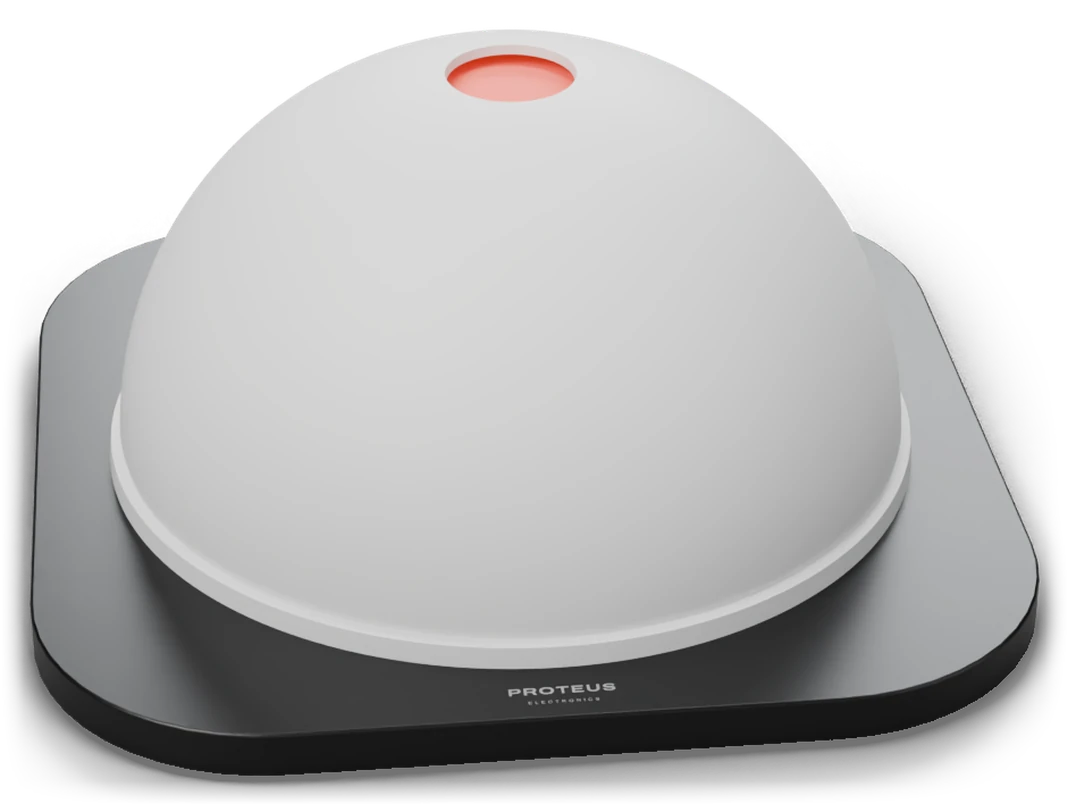
Use a dome light. The shiny, shaped metal reflects the dome evenly, so the whole end looks bright and the inkjet dots read as dark marks on it.
- Technique
- Dome
- Industries
- Packaging and labels, Pharma and food
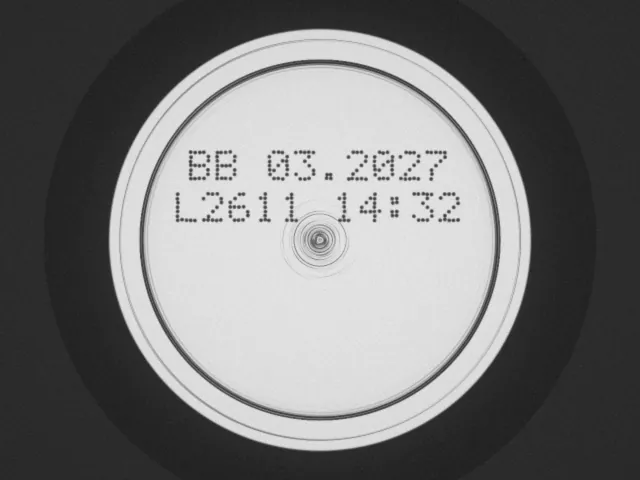
What the camera sees
Camera views are simulated: the part and the lights are modelled, then rendered as a monochrome camera would see them.
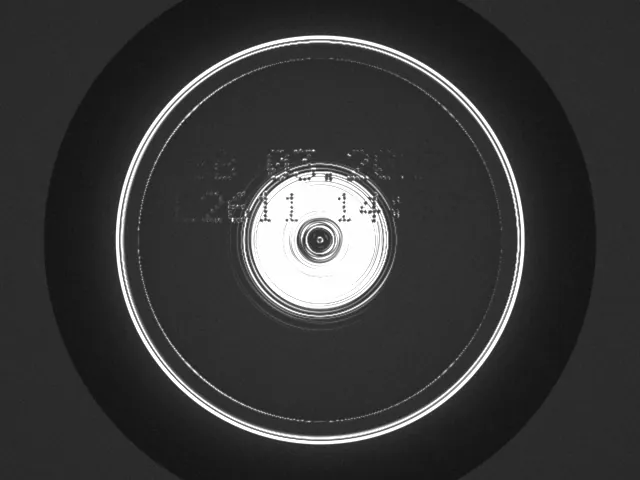 Ring lightDome
The problem
Best-before dates and lot codes are printed by inkjet onto the bottoms of cans, onto metal closures and onto foil lids, at line speed and never in quite the same place. The metal is polished and formed into rings and domes. A ring light reflects off it as one or two bright circles while the rest of the end stays dark, and dark ink on dark metal disappears. The code breaks up wherever it crosses the circles.
Why it works
A polished end reflects whatever lies in the direction of the mirror reflection, and on a dished or ringed surface that direction changes from point to point. A ring light fills only a narrow band of directions, so only a narrow band of the end lights up. A dome fills almost every direction, so nearly every point of the end reflects it and looks bright. Inkjet ink is matte and dark: it absorbs and scatters the light instead of mirroring it, so every dot reads dark on the bright metal.
How to set it up
- Size the dome so the whole end, or the area the code can land in, sits inside its even light.
- Where the metal is flat and square to the camera, usually in the centre of the end, the camera hole shows as a dark spot. Keep the reading zone off it, or use a flat dome.
- With a monochrome camera, red or white light reads black and blue inks well. Test coloured inks under each colour.
- On a fast line, strobe the dome and keep the exposure short, so the dots stay round.
- Codes on paper labels and cartons usually need no more than a bar or ring light. The dome is for shiny, shaped surfaces.
What usually goes wrong
- A ring light near the lens, which lights one or two circles of the end and leaves the rest dark.
- A dome too small for the end, so the outer rings fall into shadow.
- Wet or condensed ends straight from a filler or a cooler, where droplets add reflections of their own.
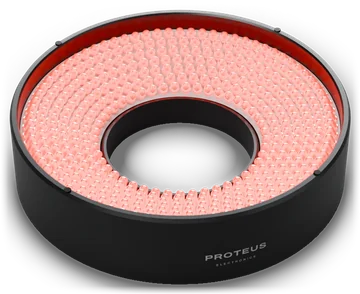
Lights for this job
More application notes
Backlight
Checking fill level and caps on bottles and jarsUse a backlight behind the bottles.
Backlight
Checking tablets in blister pockets before sealingLight the clear forming web from below with a backlight.
Dark field
Finding cracks and chips in glass vialsUse dark-field lighting: light the glass from a low angle against a black background.
Tell us what you need to see.
Describe the part, the defect and the working distance. An engineer replies with the light, or designs one.