Application noteLighting large fields of view evenly
The short answer
Use a broad area light at an angle, or a pair of them. A large source covers the whole field without a hot centre.
- Technique
- Area
- Industries
- Packaging and labels, Pharma and food
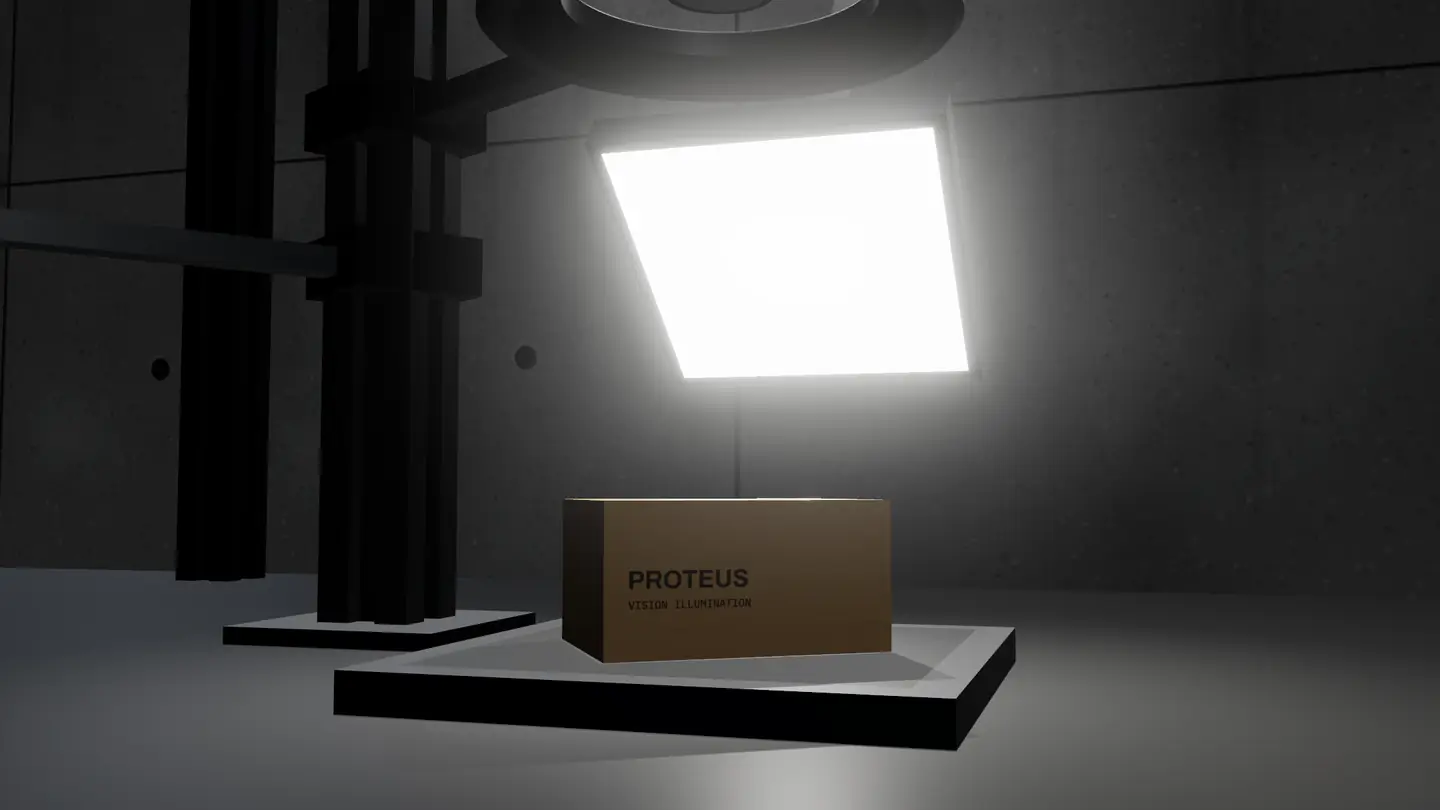
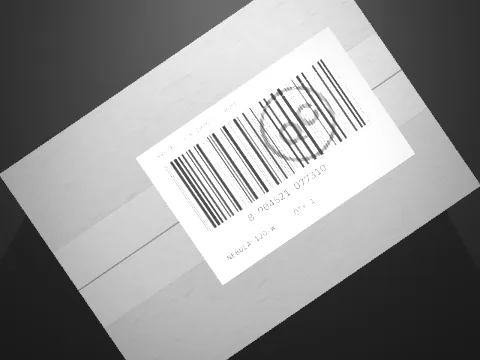
What the camera sees
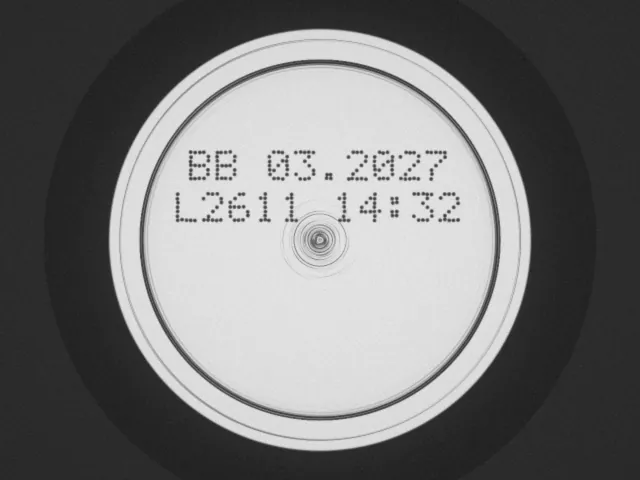
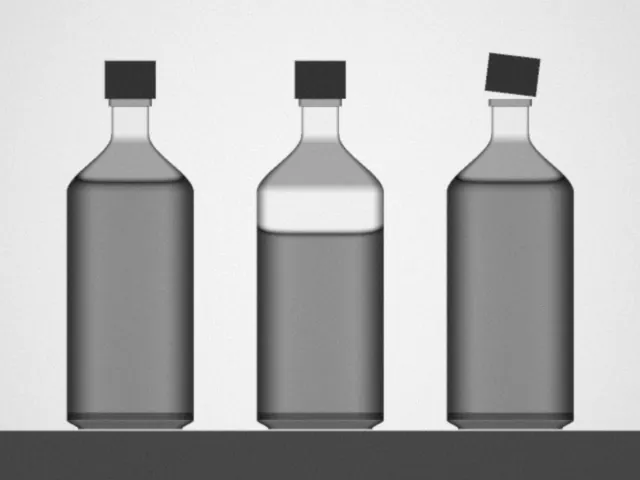
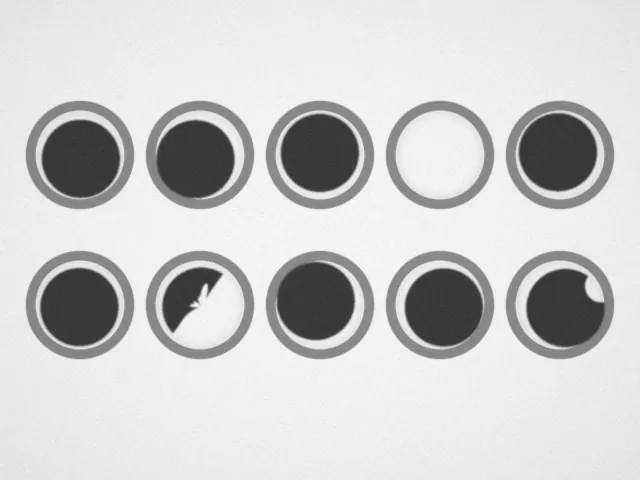
Camera views come from the lighting bench, which simulates each light on the same part.
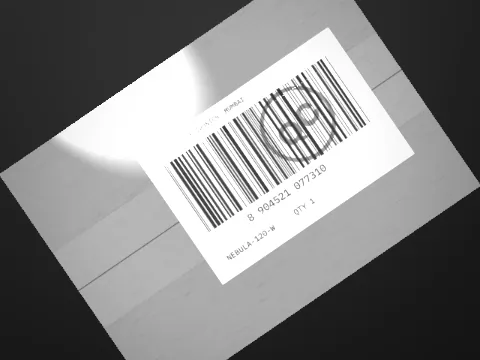 Spot lightArea light
The problem
Cartons, panels, trays, sheets and blister packs fill a large field of view. A small ring or spot light leaves a bright centre and dark corners, so a threshold that works in the middle fails at the edges. Foil, holograms and blister packs add strong reflections on top.
Why it works
How even the light is on the part depends on the size of the source relative to the field, and on its distance. A broad panel lights the field from more directions, so brightness falls off less towards the edges. Angling the panel decides where the mirror reflection from glossy material goes: away from the lens for a matte look, or deliberately into it for an even, bright image of foil.
How to set it up
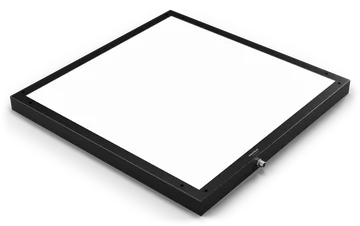
- Choose a panel at least as large as the field of view, or use two panels from opposite sides.
- Check evenness with a flat grey card: capture it, then compare the brightness at the centre and in the corners.
- Angle the panel so the reflection from glossy material misses the lens, unless you want bright-field imaging of foil.
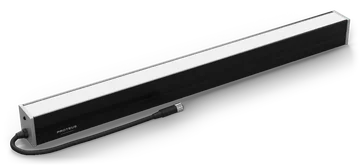
- For very large or long fields, consider a row of bar lights, or a line-scan camera with a bar light.
What usually goes wrong
- One small light in the middle of a large field.
- A panel too close and at a steep angle, which makes one side of the image brighter than the other.
Lights for this job
Tell us what you need to see.
Describe the part, the defect and the working distance. An engineer replies with the light, or designs one.