Application noteReading engraving on curved, shiny parts
The short answer
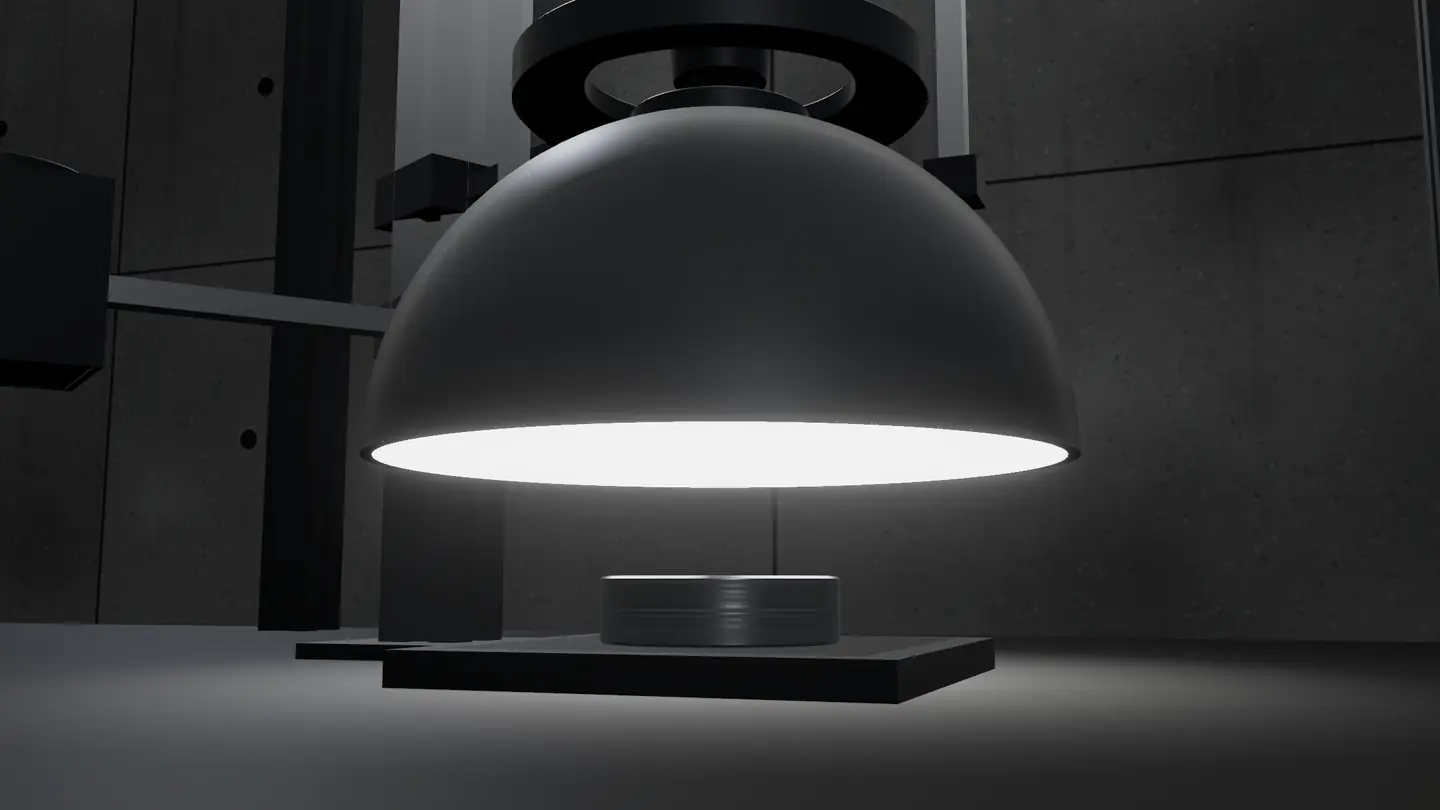
Use a dome light. It surrounds the part with even, diffuse light, so a polished curved surface looks evenly bright and the engraving reads as dark text on it.
- Technique
- Dome
- Industry
- Automotive and machined parts
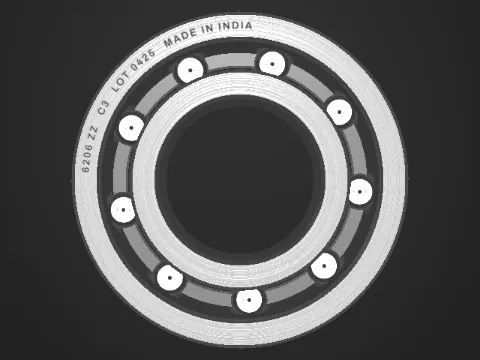
What the camera sees
Camera views come from the lighting bench, which simulates each light on the same part.
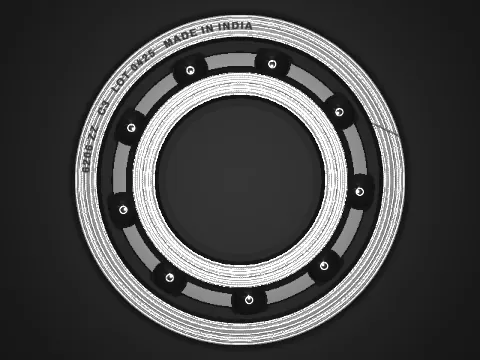 Ring lightDome
The problem
Part numbers, lot codes and logos are engraved, etched or laser-marked onto bearings, shafts, pistons, fittings and valve bodies. On polished, curved steel a direct light from a ring or a bar reflects as a bright hot spot and dark bands that follow the curvature. The characters fall into the glare, and the image changes every time the part turns.
Why it works
A polished surface acts like a mirror: the camera sees whatever lies in the direction of the reflection. On a curved part that direction changes across the surface, so a small light shows up as a streak while the rest of the part reflects the dark surroundings. A dome is bright in every direction, so whichever way the surface faces, it reflects the same even light into the lens. Engraved and etched marks are rougher than the polished metal around them. They scatter the light instead of mirroring it, and read as darker characters on a bright, even background.
How to set it up
- Size the dome so the field of view sits well inside its even light, and bring the part close enough to the opening.
- The camera looks through the hole in the top of the dome. On flat, mirror-like faces that hole can show as a dark spot in the middle of the image; use a flat dome or a co-axial light for those faces.
- Use a monochrome camera with a single-colour dome, red or white, for the highest contrast, and shield the cell from room light.
- Fix the part's position under the dome. If it sits too low or off-centre, one side falls out of the even light.
What usually goes wrong
- A ring light close to the part, which leaves a bright, ring-shaped reflection on the curve.
- A dome too small for the part, so the edges of the field fall into shadow.
- Gaps around the dome rim that let room light in and add new reflections.
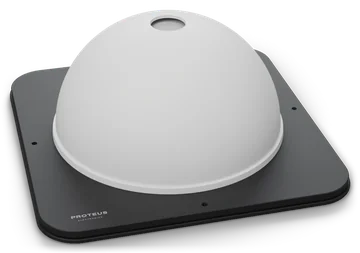
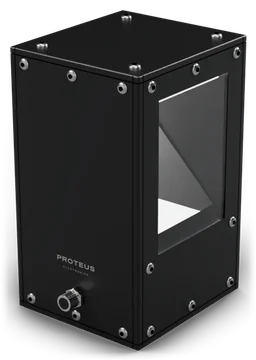
Lights for this job
More application notes
Tell us what you need to see.
Describe the part, the defect and the working distance. An engineer replies with the light, or designs one.