Application noteFinding scratches and dents on ground or polished faces
The short answer
Use a co-axial light. It lights the part along the camera's own axis, so a flat polished face looks evenly bright and any scratch or dent shows dark.
- Technique
- Co-axial
- Industry
- Automotive and machined parts
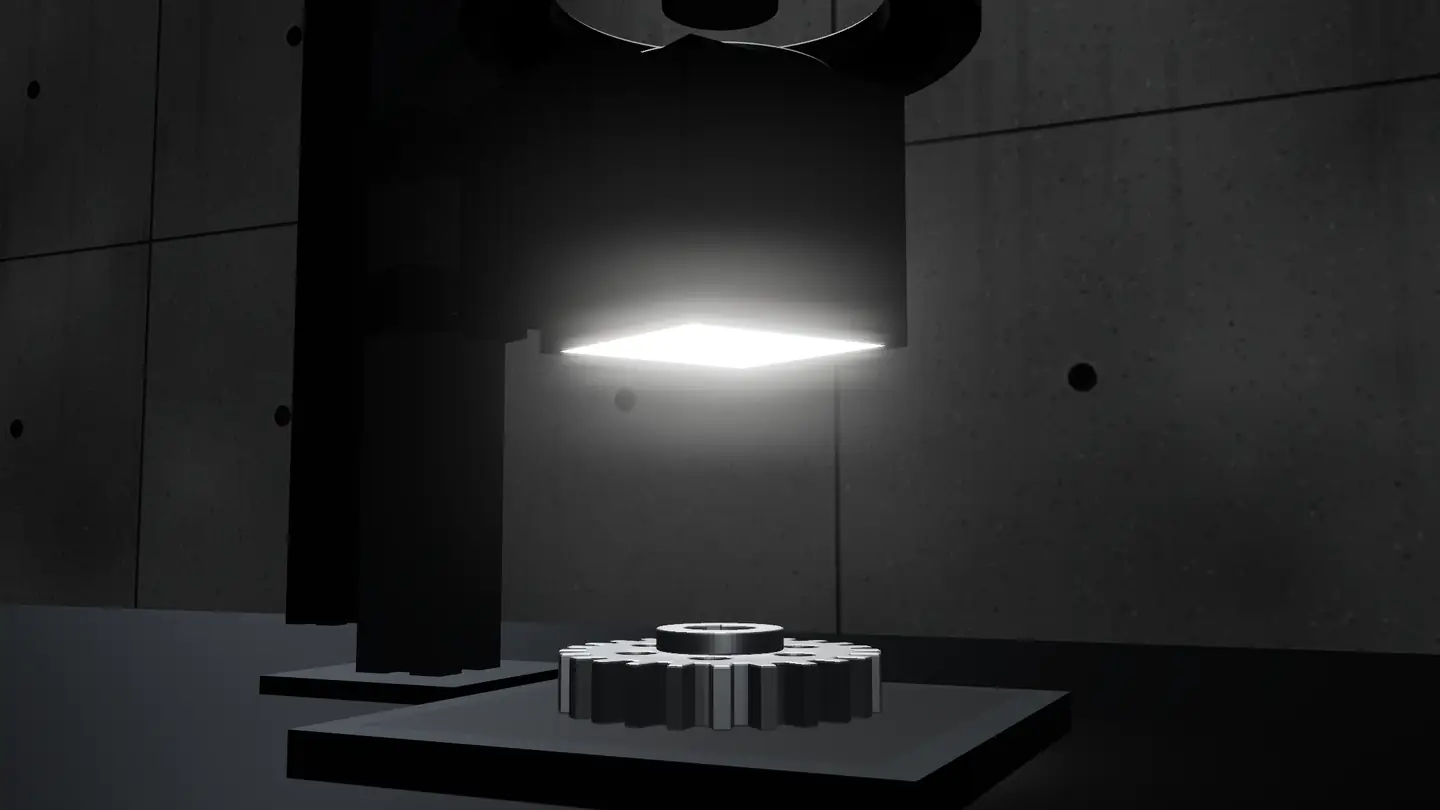
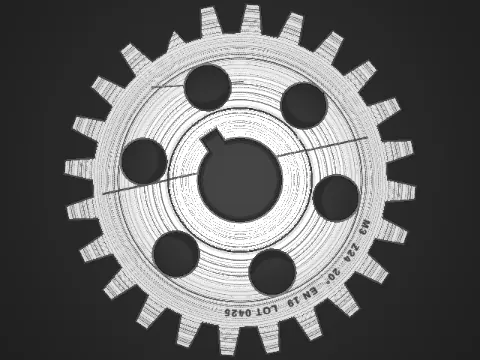
What the camera sees
Camera views come from the lighting bench, which simulates each light on the same part.
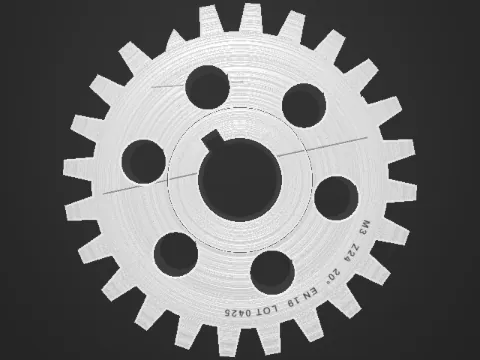 DomeCo-axial
The problem
On ground, lapped and polished faces such as valve seats, gauge blocks, seal faces and machined flanges, fine scratches and small dents are the defects that matter, and they are the hardest to see. Under diffuse light the whole face looks a uniform grey; under a ring light, reflections of the LEDs hide the defect.
Why it works
A co-axial light sends its light through a beam splitter, so it arrives along the same axis the camera looks down. A flat, mirror-like face square to the camera reflects that light straight back into the lens and looks bright. A scratch, pit or dent tilts the surface locally and sends the light away from the lens, so it shows as a dark mark on a bright background.
How to set it up
- Mount the part with the inspected face square to the camera. A tilted face reflects the light away and darkens.
- Choose a light whose window is larger than the field of view; the camera looks through it.
- The beam splitter passes only part of the light to the part, so allow more intensity or a longer exposure than with a ring light.
- For the opposite contrast, bright scratches on a dark face, use dark field: a low-angle ring light close to the part.
What usually goes wrong
- Co-axial light on curved or textured surfaces, where the reflection breaks up and the image becomes patchy. A dome suits those.
- Fingerprints and oil films, which show up as clearly as the defects.
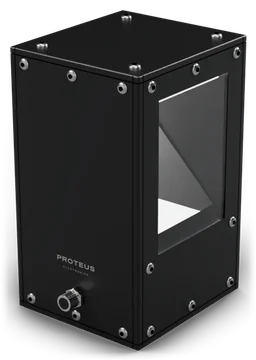
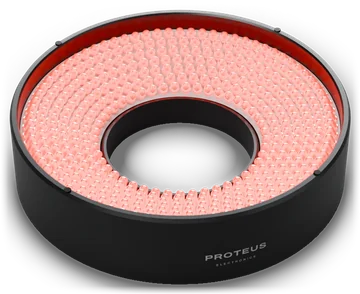
Lights for this job
More application notes
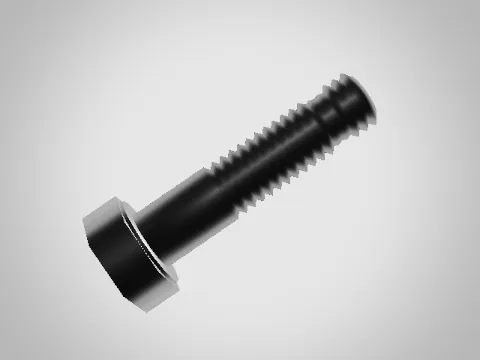
Backlight
Inspecting threads, profiles and gear teeth with a backlightUse a backlight.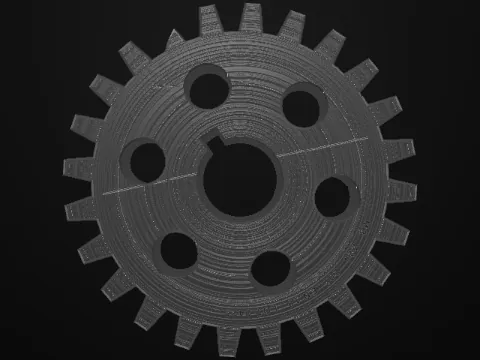
Dark field
Finding burrs and chipped edges on machined partsUse dark-field lighting: a low-angle ring light close to the part, or bar lights from the sides.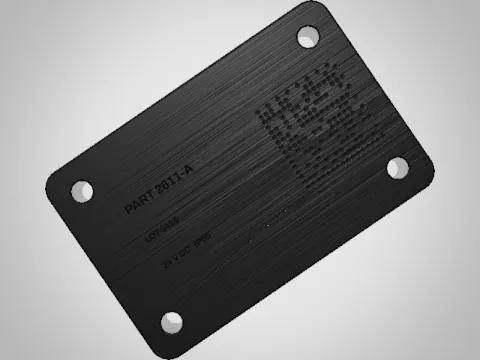
Backlight
Checking holes and slots on stamped and machined partsUse a backlight.
Tell us what you need to see.
Describe the part, the defect and the working distance. An engineer replies with the light, or designs one.