Application noteChecking holes and slots on stamped and machined parts
The short answer
Use a backlight. Every through-hole and slot shows as a bright shape in a dark part, so presence, size and position become simple measurements.
- Technique
- Backlight
- Lights
- Nebula
- Industry
- Automotive and machined parts
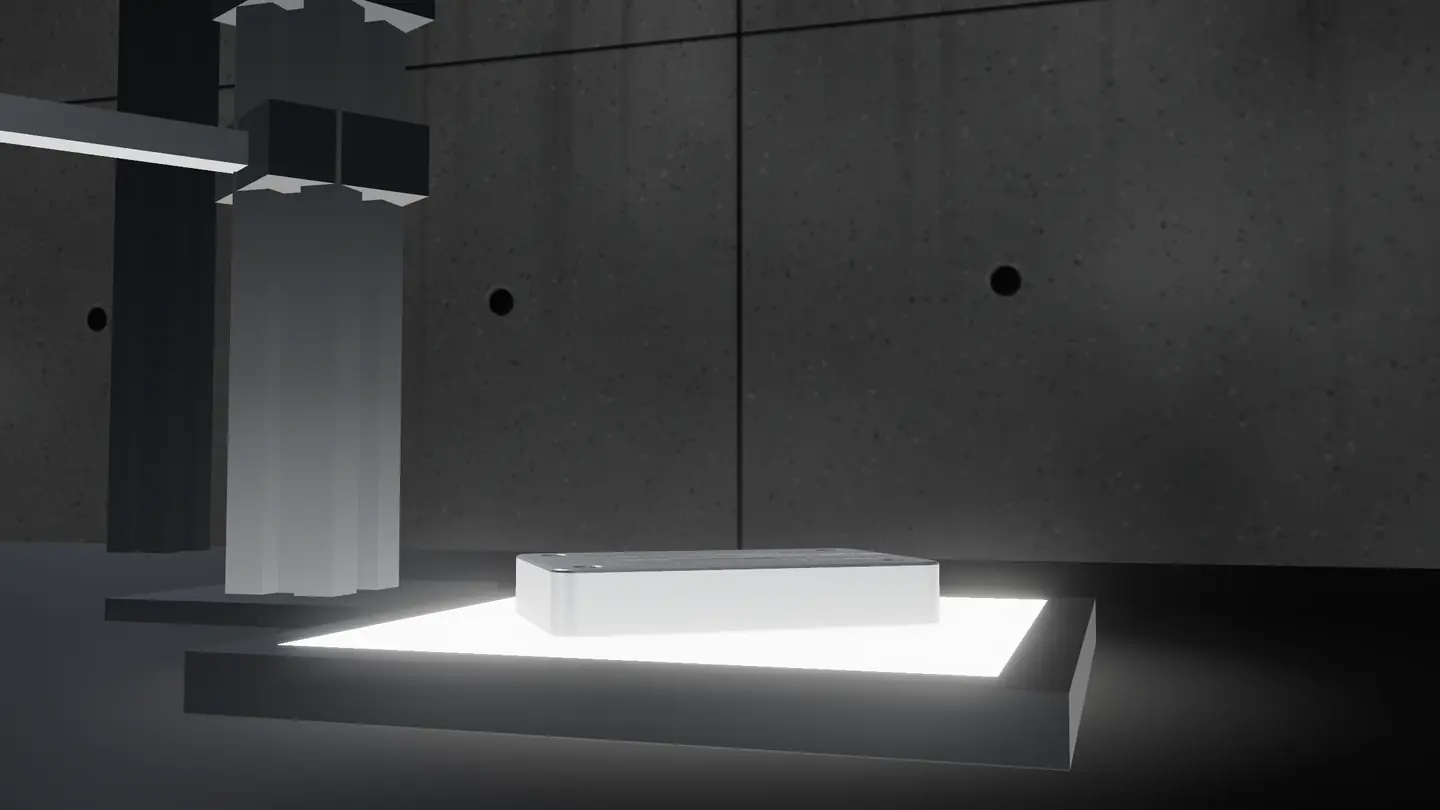
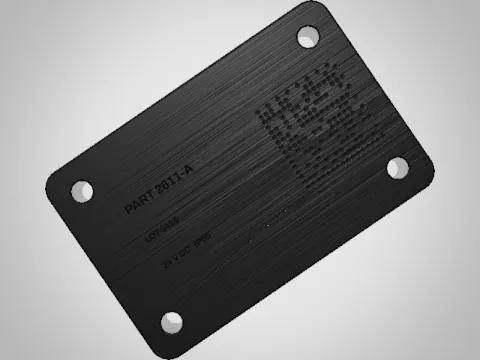
What the camera sees
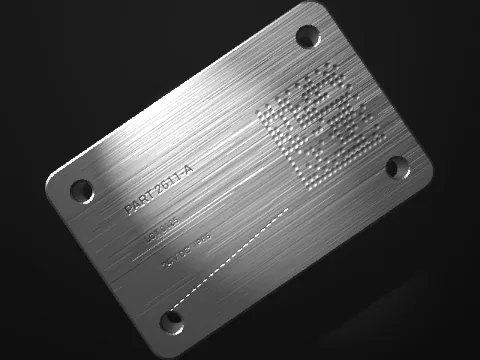
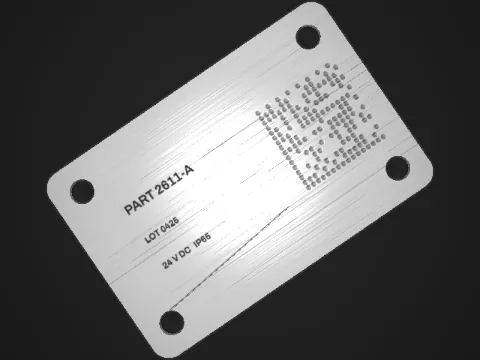
Camera views come from the lighting bench, which simulates each light on the same part.
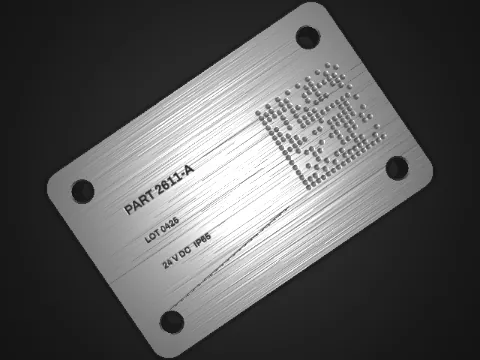 Ring lightBacklight
The problem
Brackets, plates, gaskets and housings carry holes, slots and cut-outs that must all be present, the right size and in the right place. Front lighting brings in burrs, oil, plating and machining marks, and on bright, shiny parts a hole often looks only a little darker than the metal around it.
Why it works
With the light behind the part, the camera sees light only where nothing is in the way. The part is a dark silhouette and every through-hole and slot is a bright, sharp-edged shape inside it. Surface finish no longer matters. Counting the bright shapes checks presence; their area and centre give size and position, measured against the part's own outline.
How to set it up
- Use a backlight larger than the part, so the outline and every hole sit over evenly lit area.
- Keep front light off the part. The image should show the silhouette and nothing else.
- For measurement, a telecentric lens keeps hole sizes and positions constant as the part moves towards or away from the camera.
- Blind holes and tapped holes do not pass light. Check those from the front: a ring light for presence, a dome on shiny parts.
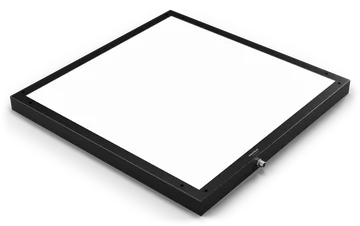
- On large sheets and panels, size the backlight to the part. We build them up to 2000 mm.
What usually goes wrong
- A front light on bright metal, where the holes are only a little darker than the face.
- A part that does not lie flat: a tilted hole looks narrower than it is.
- A backlight smaller than the part, so holes near the edge fall over the dimmer border of the panel.
Lights for this job
Tell us what you need to see.
Describe the part, the defect and the working distance. An engineer replies with the light, or designs one.