Application noteReading barcodes and labels under glossy film or tape
The short answer
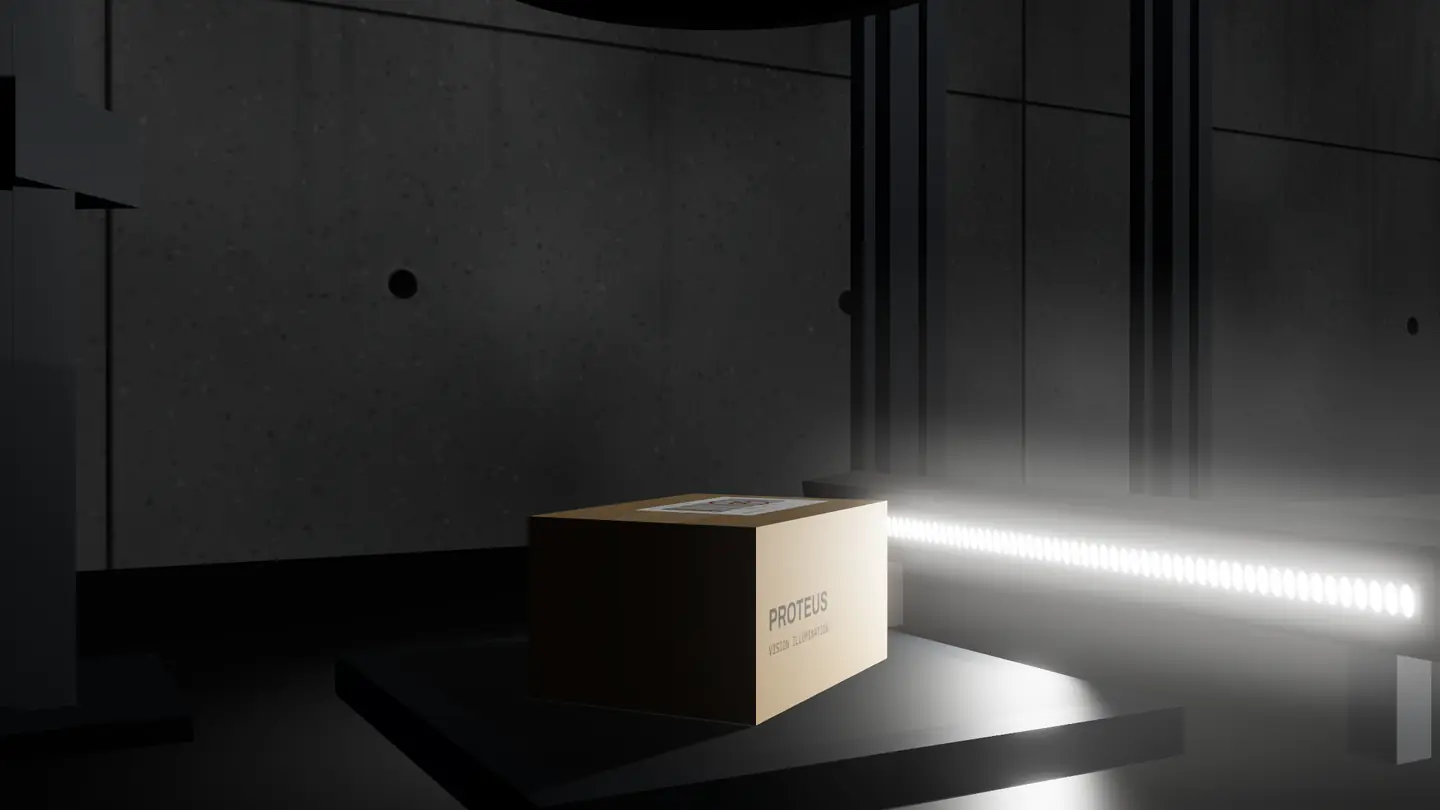
Light from the side with a bar light, at an angle that sends the mirror reflection from the film away from the lens.
- Technique
- Directional
- Industry
- Packaging and labels
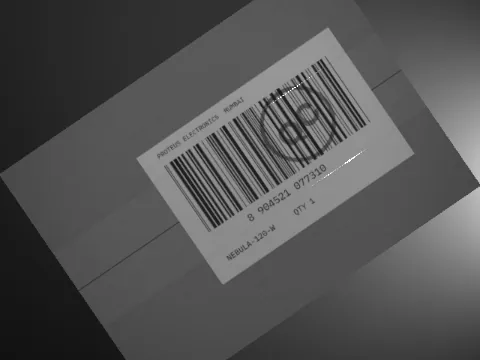
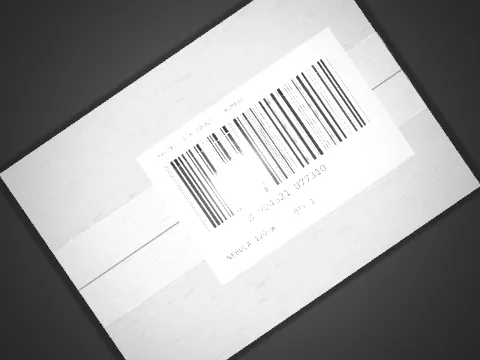
What the camera sees
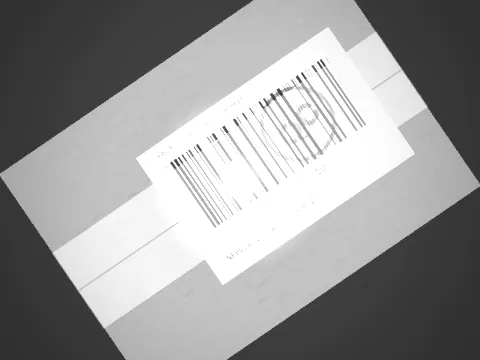
Camera views come from the lighting bench, which simulates each light on the same part.
 Co-axialBar light
The problem
Labels on cartons and trays are often covered by clear tape, shrink wrap or a glossy laminate. A light above the label, near the lens, reflects off the film straight back into the camera. The reflection appears as a white patch that wipes out bars and characters, and it moves as the film wrinkles.
Why it works
Glossy film reflects like a mirror: light leaves at the same angle it arrives. Move the light to the side and its reflection leaves at the opposite angle, missing the lens. The paper label under the film is matte, so it scatters light in all directions and some of it still reaches the camera. The bars stay readable and the glare is gone.
How to set it up
- Mount a bar light to one side, at an angle where you can no longer see the reflection of the light in the film from the camera position.
- Tilting the camera a few degrees away from square also moves the reflection out of the image.
- For a wider label, use two bars from opposite sides, each at an angle that keeps its reflection out of the lens.
- If some glare remains, cross-polarise: a polariser on the light and another on the lens, turned 90 degrees to it.
- On a moving conveyor, a long bar light with a line-scan camera, or a short exposure, keeps the code sharp.
What usually goes wrong
- The light mounted right beside the lens, which puts the reflection in the centre of the image.
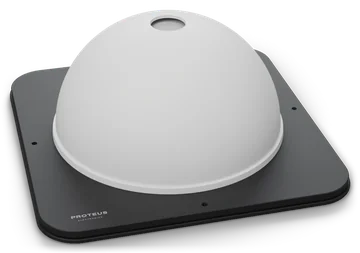
- Wrinkled shrink wrap, where every wrinkle reflects at a different angle. A dome or a broad diffuse light helps there.
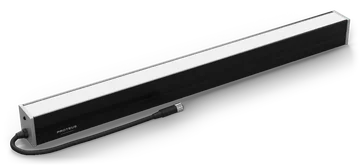
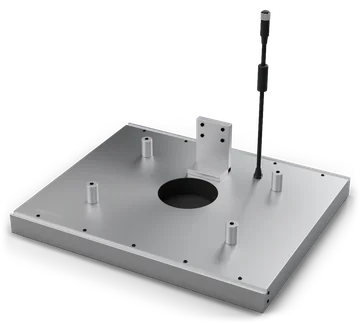
Lights for this job
More application notes
Bright field, red
Using coloured light to hide or highlight printLight the part in the same colour as the print you want to hide, or in the opposite colour to make it stand out.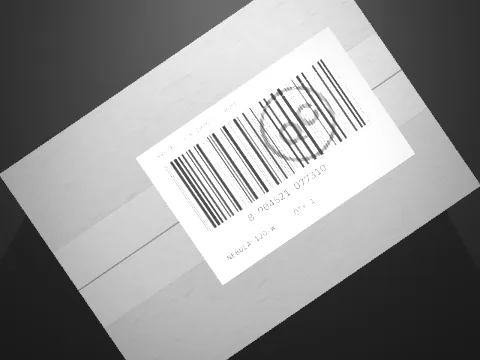
Area
Lighting large fields of view evenlyUse a broad area light at an angle, or a pair of them.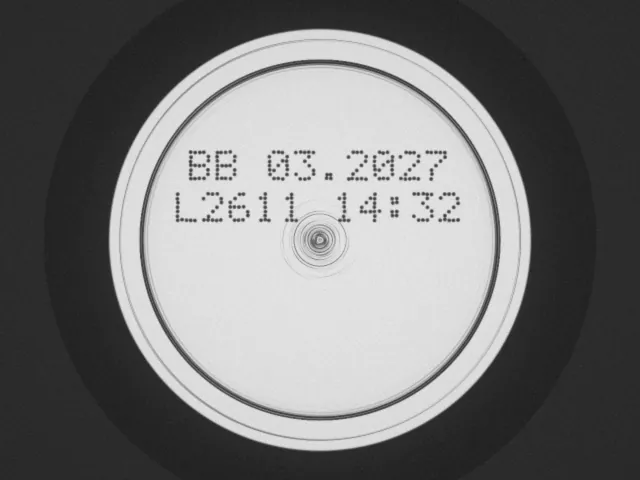
Dome
Reading date and lot codes on can ends and capsUse a dome light.
Tell us what you need to see.
Describe the part, the defect and the working distance. An engineer replies with the light, or designs one.